
Omega-3s Compared: Eating Fish Versus Taking Capsules
Fish oil capsules are among the best-selling supplements worldwide. How does taking them compare with simply eating fish — according to the research?
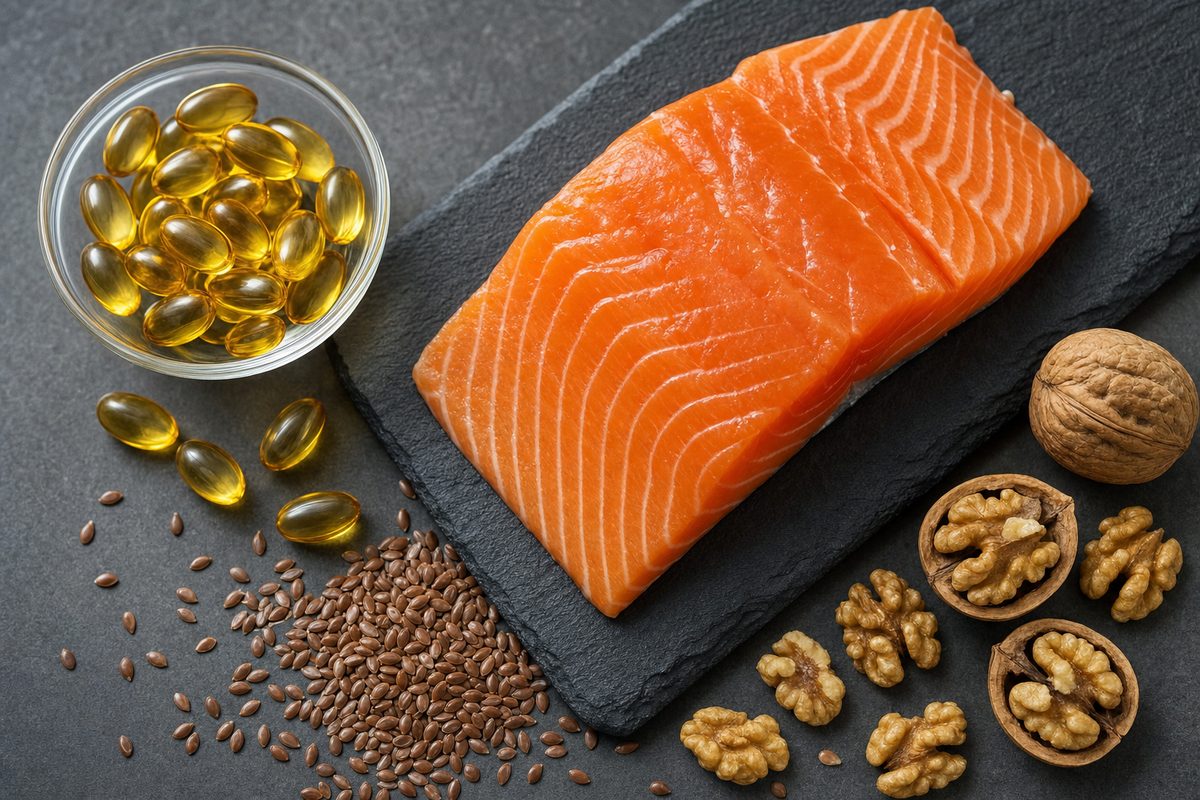
Omega-3 fatty acids — above all EPA and DHA — are a fixture of the supplement aisle. The obvious comparison is rarely spelled out, though: how do capsules stack up against the original delivery format, a serving of fish?
What the reference sources say
The NIH Office of Dietary Supplements notes that fatty fish such as salmon, mackerel, herring and sardines are the richest food sources of EPA and DHA. The Dietary Guidelines for Americans recommend that adults eat about 8 ounces (roughly 225 grams) of seafood per week, a target framed around whole foods rather than pills.
What the trial evidence shows
For supplements, the largest systematic evaluation to date is a Cochrane review covering more than 100,000 participants. Its conclusion is sobering for the capsule shelf: increasing EPA and DHA intake through supplements had little or no effect on deaths from any cause, and at best a small effect on cardiovascular events. That does not make the capsules useless in every scenario — but it does mean the dramatic expectations attached to them are not supported by the pooled trial data.
Why food may behave differently
A fish dinner is not just an omega-3 dose. It typically displaces other protein sources from the plate and brings protein, vitamin D, selenium and iodine along with it. Observational research that links fish consumption to health outcomes therefore measures a whole dietary pattern, not an isolated molecule — one reason results for fish and results for capsules should not be treated as interchangeable.
The practical comparison
Based on the sources above, the ranking is unspectacular but clear. Regular fish consumption in line with dietary guidelines is the better-supported route to omega-3 intake. Capsules are a fallback worth discussing for people who do not eat fish at all — ideally with a doctor or pharmacist, especially when other medication is involved. What the evidence does not support is stacking capsules on top of an already fish-rich diet in the hope of extra benefit: more is not better here, it is simply more.
For vegetarians and vegans, the same logic applies with different foods: walnuts, flaxseed and rapeseed oil supply the plant omega-3 ALA, which the body converts to EPA and DHA only in small amounts — a limitation the NIH fact sheet describes in detail and a reasonable topic for individual dietary advice.